A handmade business needs room to show the care behind its products. Customers also need a practical explanation of what they can order and how the process works. Good handmade business website design brings both together.
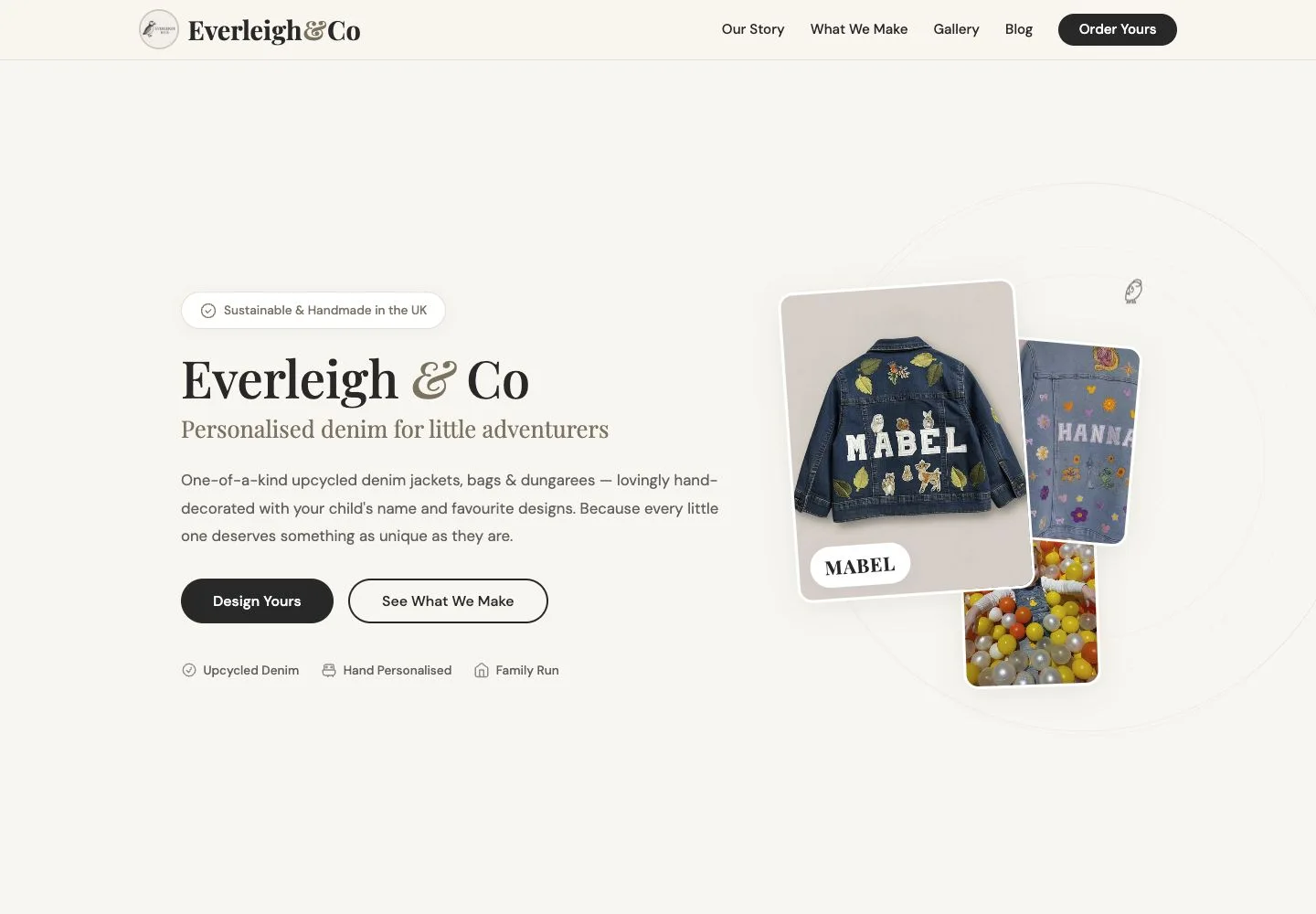
We built the Everleigh & Co website for a family business creating personalised pieces from upcycled denim. Its jackets, bags and dungarees are individual creations, so the website centres on examples and conversations about custom orders.
For other makers and small creative businesses, this project illustrates an important starting point: build the website around how you actually work with your customers.
Let real examples explain the product
The site shows completed pieces in a gallery and introduces the main product types separately. Visitors can see the kinds of personalised designs available before making an enquiry.
For bespoke work, that is particularly useful. Customers may like the idea but struggle to describe what they want. Examples give them a starting point and help make an unfamiliar ordering process feel more manageable.
When preparing photographs for your own site, include the details that matter to a buyer. Show the whole item, a close view of the finish and, where appropriate, the product in use. Give each image a purpose. A smaller collection of clear examples can explain your work more effectively than a large gallery of near-identical shots.
Explain the person and the process
Everleigh & Co’s story introduces the family behind the business and its approach to reusing denim. A separate section walks through sourcing, design, creation and delivery.
Those sections answer different questions. The story helps visitors understand the business. The process explains what happens if they place an order. Both have a place, but customers should be able to find the practical information without reading every paragraph of background.
For a maker, a useful process explanation might cover the initial conversation, how choices are agreed, what you need before starting and how the finished item reaches the customer. Use the actual steps in your business. Set expectations you can keep, and update them when your workload or production arrangements change.
Match the enquiry to the product
The custom-order form asks about the piece, size, personalisation and design ideas. It also makes clear that the next step is a conversation about the request.
That suits a product where details need discussing. An enquiry can be the right starting point when every order is different, even if an online checkout would be appropriate for a separate range of standard items.
Before adding a form to your own site, write down what you need to provide a useful first reply. Ask for those details in plain language. Keep optional questions optional, and explain what the customer can expect after sending the request. A clearly described next step gives people a reason to complete the form.
Connect the website with the rest of the business
The site links to Instagram for more examples and to Vinted for available pieces. The website gives these different activities a shared home and explains where each route leads.
That can be a practical arrangement for a small business with an existing audience on other platforms. The website can hold the fuller story, explain the offer and provide a consistent enquiry route while social accounts show ongoing work.
Our Everleigh & Co project overview brings the main elements together. If you make, create or sell something personal, our website design service can help you present the work clearly and make that first customer conversation easier to start.